When it comes to land transactions—whether buying, selling, or developing—having a professional land surveyor is essential. A land surveyor ensures that property boundaries are accurately measured and documented, which is crucial for legal and financial reasons. But what should you look for when choosing the right land surveyor for your needs? This article will explore the top qualities and qualifications that a reliable land surveyor should possess, ensuring you make an informed decision.
Professional Qualifications and Licensing
The first aspect to consider is whether the land surveyor holds the necessary professional qualifications and licenses. A qualified land surveyor should have completed a degree in surveying or a related field, providing them with a solid understanding of surveying principles. In addition to educational qualifications, a land surveyor must also hold a valid license to practice in your area. Licensure typically involves passing a series of exams and committing to ongoing education in the field. Always verify their license with the relevant state or national board to ensure it is current and in good standing.
A land surveyor with professional affiliations often indicates a higher standard of expertise and ethical practice. Membership in organizations such as the American Congress on Surveying and Mapping or the National Society of Professional Surveyors demonstrates a commitment to the profession. These organizations require members to adhere to strict codes of ethics and standards, ensuring that you receive quality service. Additionally, such affiliations can provide the surveyor with access to the latest industry developments and networking opportunities, which can benefit your project.
Experience is another crucial factor that correlates closely with a land surveyor’s qualifications. Experience, importantly, goes beyond the number of years in the field—it includes the variety and complexity of projects they have completed. More experienced surveyors are better equipped to handle unexpected challenges on the job. Furthermore, surveyors who have worked on similar projects to yours will have a quicker and more efficient approach to delivering the necessary services. Always ask for references or a portfolio of past work to gauge their level of experience and reliability.
Technological Proficiency
The surveying industry has seen significant technological advancements over the past few decades. A competent land surveyor should possess proficiency in using advanced tools and technologies, such as GPS, Total Stations, and drones. These tools allow for increased accuracy in measurements and can substantially reduce the time required on your project. Surveyors who do not stay updated with technological advancements can fall behind in providing the most efficient service. When interviewing potential surveyors, ask them about the tools they use and how these tools benefit their work and your project.
Another advantage of technology-savvy surveyors is their ability to provide digital deliverables. Maps and survey reports that are easily transferable in digital formats can be an incredible asset for your records and can simplify the process of sharing information with other stakeholders. Digital surveying solutions can include three-dimensional models, geographical information system (GIS) mapping, and data management solutions. These tools can enhance the clarity and detail of the survey results, which can be critical for various development and planning purposes.
A surveyor who is proficient with current technology also shows an ability to adapt to future innovations. Technology is continually evolving, and a land surveyor who keeps up with these changes can provide more efficient and accurate services. This adaptability also translates into being skilled at troubleshooting and problem-solving, ensuring that the surveyor can handle any technological setbacks during a project. This level of proficiency signifies a forward-thinking professional, willing to invest in the necessary tools to provide top-tier services.
Communication and Customer Service
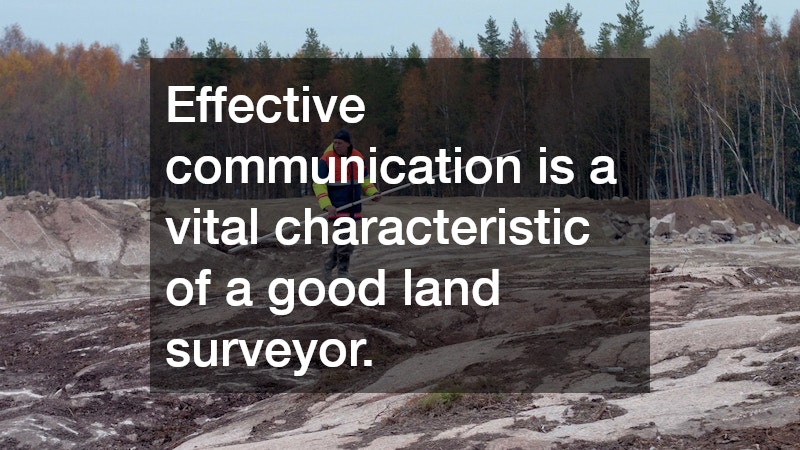
Effective communication is a vital characteristic of a good land surveyor. Clients need to be clearly informed about the survey process, results, and any issues that may arise. A surveyor who communicates effectively can prevent misunderstandings and set accurate expectations for project timelines and costs. This includes being able to explain technical terms or complex measurements in a way that is understandable to you and other laypeople involved in the project. Good communication also involves listening skills, enabling the surveyor to accurately understand and meet your specific needs.
Customer service also plays a significant role in selecting a land surveyor. A surveyor who provides exceptional customer service will go the extra mile to ensure client satisfaction. This can include timely responses to inquiries, a willingness to adjust plans according to shifting project needs, and a professional demeanor. Reviews and testimonials from previous clients can offer insight into a surveyor’s customer service approach. A customer-focused surveyor is likely to provide a more seamless and stress-free experience throughout your project timeline.
Additionally, a land surveyor who values customer relations is more likely to provide transparent pricing and detailed contracts. It is important to fully understand what services are included, the timeframe for project completion, and the cost structure. A surveyor should be willing to explain any part of the contract and ensure all parties are on the same page. This transparency builds trust, ensuring that all involved parties are secure in the arrangement. Therefore, when you choose a surveyor with excellent customer service, you choose a partner who values long-term professional relationships.